


White Monastery Sohag: History, Architecture, and Why It Belongs on Your Sohag Tour
✨ Overview
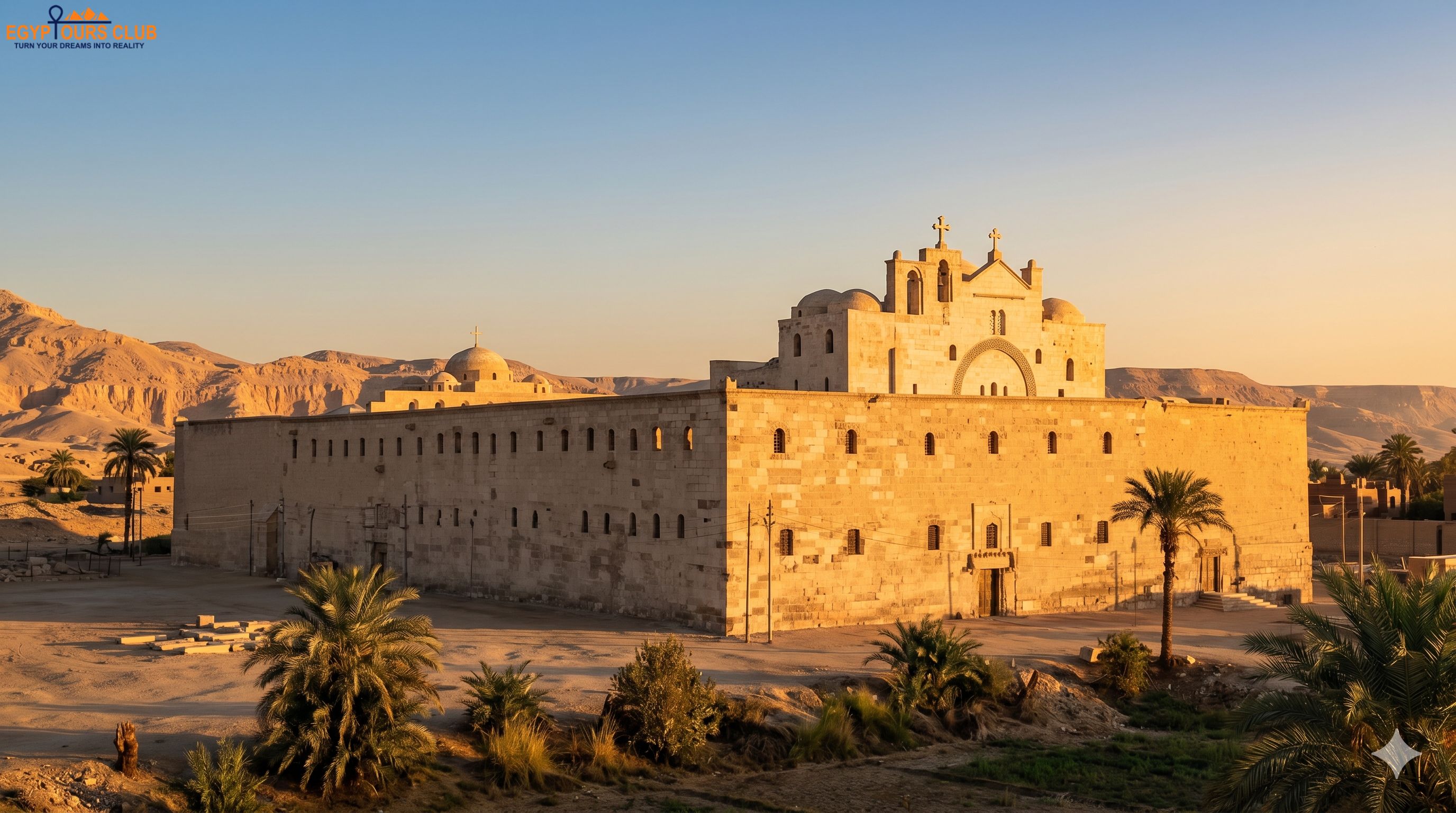
The White Monastery Sohag is one of the most impressive Christian monuments in Upper Egypt and one of the most rewarding hidden cultural stops for travelers exploring Sohag. Known also as White Monastery Egypt, White Monastery Sohag Egypt, White Monastery in Sohag, Deir el-Abyad, and Dayr al-Abyad, this historic monastery is closely associated with St. Shenouda Monastery Sohag and the broader spiritual and architectural legacy of Christian Egypt. Coptic Orthodox Church sources describe it as the Monastery of Saint Shenouda in Sohag, built of white limestone and dating back to the second half of the fifth century. Yale Egyptology also identifies it as the White Monastery, or the Monastery of St. Shenoute, located around 8 km west of modern Sohag.
For travelers, the Monastery of St. Shenouda is far more than a religious landmark. It is an unforgettable cultural site where sacred history, monumental stone architecture, desert scenery, and Coptic heritage all come together. That is why searchers use a wide range of intent-rich phrases such as what is White Monastery Sohag, history of White Monastery Sohag, why is White Monastery important, visit White Monastery Sohag, and White Monastery Sohag tour. These are not just SEO opportunities. They reflect real traveler intent.
If your goal is to create a page that both educates the visitor and encourages booking, the White Monastery Coptic monastery angle is ideal. It serves historical travelers, faith tourism audiences, architecture lovers, and premium cultural tourists who want more than the standard Egypt itinerary. It also pairs naturally with related visits such as the White Monastery and Red Monastery Sohag route, one of the strongest cultural combinations in Sohag. Egypt’s official monuments platform identifies the Red Monastery as one of the most important monasteries of early Christianity in Sohag, making the pairing especially valuable for a travel-focused page.
🏛️ What Is White Monastery Sohag?
A common search is: what is White Monastery Sohag?
The short answer is that the White Monastery Sohag is a major Coptic Orthodox monastery in Upper Egypt, associated with Saint Shenouda and known for its striking white limestone construction. It is one of the best-known examples of an early Christian monastery Egypt offers and one of the most historically important religious landmarks in the Sohag region. The Coptic Orthodox Church describes it as the Monastery of Saint Shenouda, while Yale Egyptology refers to it as the White Monastery or Monastery of St. Shenoute.
In simple terms, White Monastery Sohag explained means understanding it as:
- a major ancient monastery in Sohag
- a leading center of Coptic heritage Sohag
- a monument associated with St. Shenouda monastery Egypt
- one of the most visually distinctive examples of ancient Christian architecture Egypt
That makes White Monastery Upper Egypt one of the most important landmarks for visitors who want to go beyond the usual tourist circuit and discover deeper layers of Egypt’s religious and cultural history
📜 History of White Monastery Sohag
The history of White Monastery Sohag is one of the strongest reasons this site deserves a long-form page and a dedicated travel stop. According to Coptic Orthodox Church sources, the monastery dates back to the second half of the fifth century and is called the White Monastery because of its white limestone construction. Wikipedia’s compiled historical summary identifies the monastery as founded by Saint Pigol and made famous under Saint Shenoute, under whom the monastic federation grew dramatically in scale and influence.
This is why phrases such as White Monastery St. Shenouda history, St. Shenouda Monastery Sohag, and Shenoute monastery Sohag are so important. The site is not just architecturally impressive. It is deeply tied to one of the most influential monastic leaders in Egyptian Christianity. Yale also notes that the White Monastery was the primary member of a federation that included the Red Monastery to the north and a women’s foundation to the south at Atripe.
📊 Historical Snapshot
| Historical element | Why it matters |
|---|---|
| Fifth-century origins | Gives the monastery exceptional antiquity and authority |
| St. Shenouda connection | Makes the site spiritually and historically central in Coptic monasticism |
| Monastic federation role | Shows the monastery was part of a wider Christian landscape in Sohag |
| Long survival and reuse | Explains why the site remains meaningful today for heritage travelers |
That is why White Monastery Coptic history and historic monasteries in Sohag are powerful keyword groups for building topical authority.
⭐ Why Is White Monastery Important?
A very important search angle is: why is White Monastery important?
The answer is not limited to one point. The site is important because it combines:
- deep Christian history
- major monastic legacy
- striking architecture
- cultural importance in Sohag
- strong travel value for heritage tourism
The White Monastery Sohag facts that matter most to visitors are not just dates and names. They are the reasons the place feels unforgettable:
- it is one of the strongest examples of an early Christian monastery Egypt
- it preserves major evidence of Coptic heritage Sohag
- it is one of the most meaningful historic monasteries in Sohag
- it stands near the Red Monastery, making the combined visit especially rewarding
This makes the site ideal for both informative content and booking-oriented travel pages. A reader may first search White Monastery Egypt or why is White Monastery important, but once they understand the site’s significance, they are much more likely to search visit White Monastery Sohag or White Monastery Sohag tour.
🧱 White Monastery Architecture, Limestone Walls, and Cultural Power
One of the strongest keyword clusters around the site is architectural:
- White Monastery architecture
- White Monastery church architecture
- White Monastery limestone facade
- White Monastery limestone walls
- ancient Christian architecture Egypt
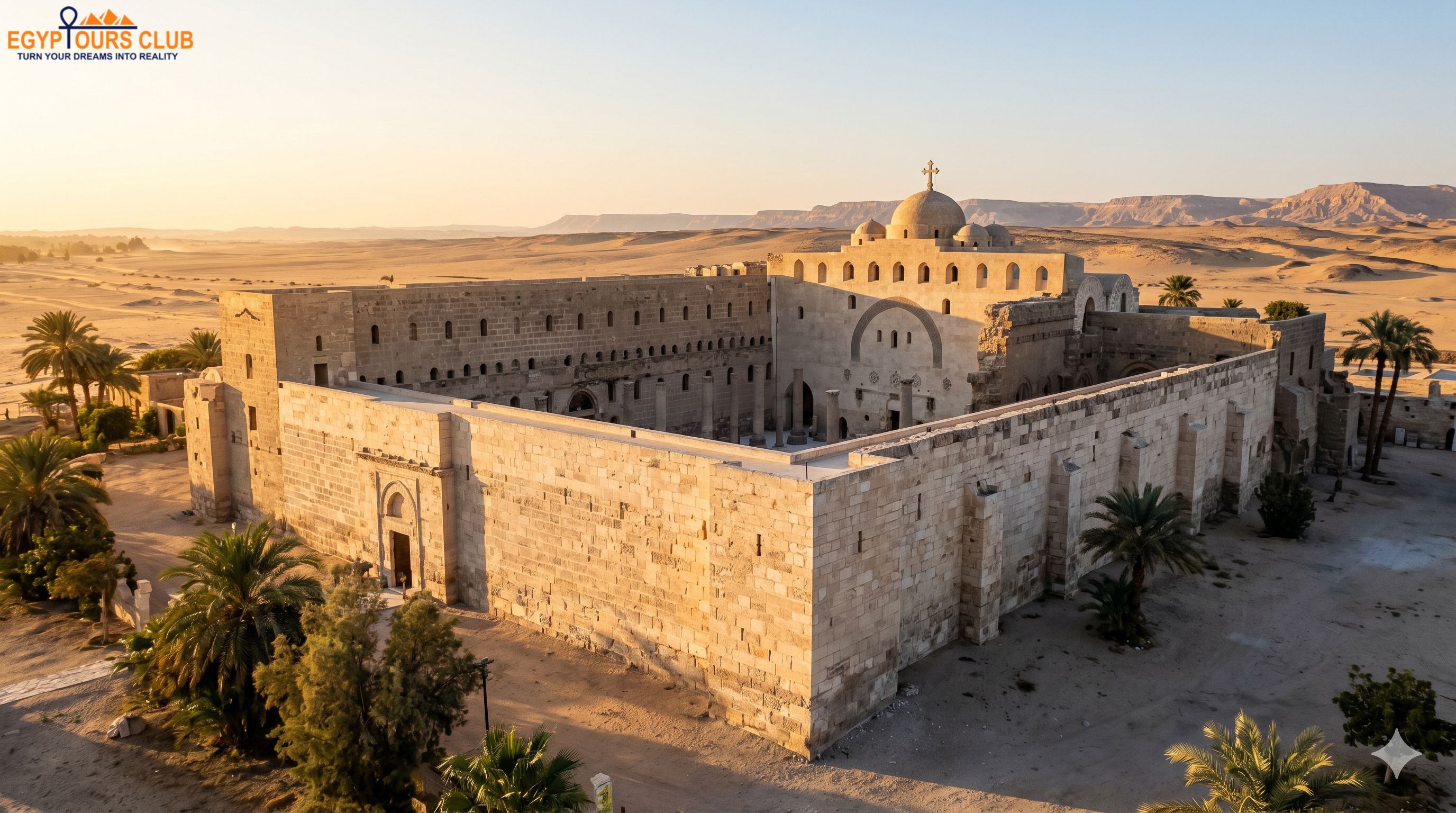
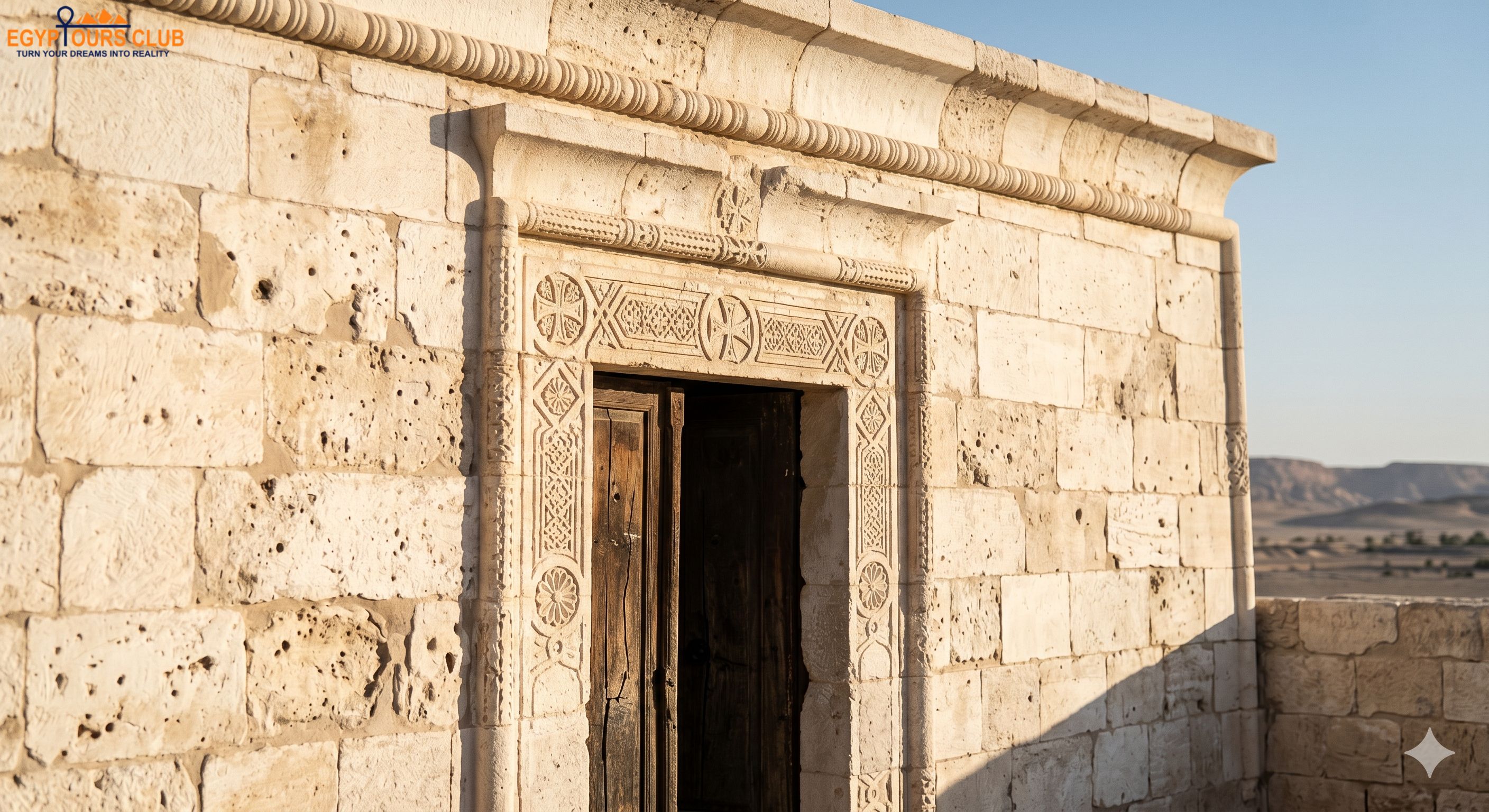
This is where the page can become visually powerful and distinct. The monastery is called the White Monastery because of its white limestone. The Coptic Orthodox Church explicitly states this, and Yale confirms the site’s identity and architectural distinctiveness. Wikipedia further describes the surviving church complex as basilican in plan, with outer white limestone walls and monumental construction that evokes an Egyptian temple-like exterior.
✅ Architectural highlights
- monumental white limestone outer walls
- powerful desert-edge setting
- basilican church layout
- strong links to early Christian monastic design
- visual contrast with the nearby Red Monastery
- one of the most distinctive examples of White Monastery church Sohag
📊 Architecture Table
| Feature | Why it stands out |
|---|---|
| White limestone exterior | Defines the monastery’s name and visual identity |
| Basilica-style church complex | Makes it important in the history of Christian architecture in Egypt |
| Temple-like outer massing | Creates a dramatic visual impression for visitors and photographers |
| Desert-edge location | Strengthens the atmosphere and travel appeal |
This section naturally supports visual and cultural keywords such as White Monastery interior, White Monastery ruins, White Monastery church architecture, White Monastery travel photos, and White Monastery Sohag photos.
📚 White Monastery Library, Scholarship, and Coptic Heritage
Another authority-building angle is the monastery’s role in Christian learning. One of the strongest phrases here is White Monastery library. Wikipedia’s historical summary notes that the monastery once had one of the greatest libraries of Christian Egypt, containing around 1,000 codices, even if only a fraction survives today.
This greatly strengthens the page from an E-E-A-T perspective because the site is not only beautiful and old. It was also a place of knowledge, manuscript culture, and religious learning. That makes it ideal for readers searching:
- White Monastery Coptic history
- St. Shenouda monastery Egypt
- Coptic heritage Sohag
- historic monasteries in Sohag
For a tourism site, this is excellent because it deepens the experience. Travelers are far more likely to remember and book a site that feels intellectually rich, not just photogenic.
🔴 White Monastery and Red Monastery Sohag
One of the best ways to strengthen both content depth and booking intent is to present the White Monastery and Red Monastery Sohag together.
This pairing is powerful because:
- both are major Christian landmarks in Sohag
- both belong to the early history of monastic Egypt
- both offer strong visual contrast
- both create a more complete Sohag monastery tour
Yale notes the White Monastery’s connection within a broader federation including the Red Monastery, while Egypt’s official monument platform describes the Red Monastery as one of the most important monasteries established during early Christianity in Sohag.
That is why keywords such as:
- White Monastery near Red Monastery
- White Monastery and Red Monastery tour
- Sohag monastery tour
- Coptic tour Sohag Egypt
are extremely valuable for a tourism-focused page.
📊 Why pair both monasteries?
| Route angle | Value for the visitor |
|---|---|
| White Monastery only | Strong focused visit for architecture and St. Shenouda legacy |
| Red Monastery only | Excellent for early Christian monastic context |
| White + Red together | Best combined cultural and visual experience in Sohag |
🚗 White Monastery Sohag Tour: How to Visit and Why It Converts
Now we move into direct booking intent.
Searchers using:
- White Monastery Sohag tour
- visit White Monastery Sohag
- how to visit White Monastery Sohag
- White Monastery Sohag visitor guide
- private tour White Monastery Sohag
- White Monastery Sohag location
are no longer just learning. They are actively planning.
The strongest strategy here is to frame the site as part of a larger cultural route in Sohag rather than as an isolated stop. That means:
- things to do in Sohag Egypt
- Sohag monastery tour
- Coptic tour Sohag Egypt
- White Monastery and Red Monastery tour
all become conversion-supporting keywords.
✅ Best visit options
- short cultural stop at White Monastery Sohag
- combined White Monastery and Red Monastery tour
- full Sohag monastery tour
- expert-led private tour White Monastery Sohag
- wider Coptic tour Sohag Egypt
📍 Practical travel framing
The monastery is located west of Sohag in the desert-edge zone, with sources placing it several kilometers from the modern city and in the Mount of Adribah area.
This makes the White Monastery Sohag location easy to integrate into a day route, especially for visitors already interested in Upper Egypt’s lesser-known heritage.
🧭 Things to Do in Sohag Egypt Around White Monastery
To support commercial and internal-linking intent, this section matters a lot.
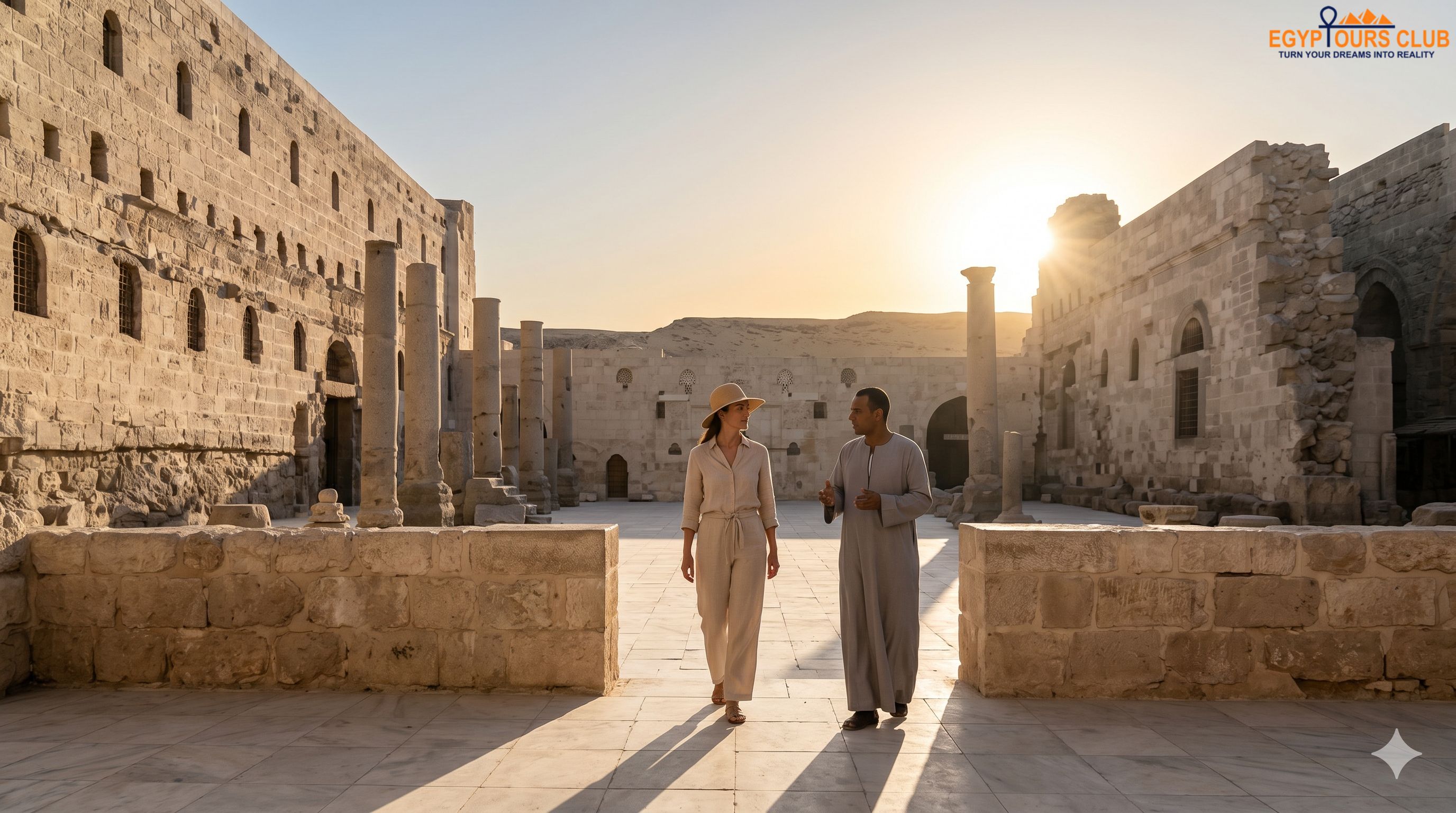
If someone searches things to do in Sohag Egypt, the White Monastery in Sohag should appear not only as a religious site but as a major cultural anchor. It works especially well with:
- Red Monastery
- broader Coptic heritage routes
- history-themed Upper Egypt itineraries
This helps the page serve multiple user journeys:
- information seekers
- photographers
- cultural travelers
- faith tourism audiences
- private tour clients
That is why White Monastery Sohag visitor guide should not just explain the monastery itself. It should show why the monastery belongs inside a fuller Sohag itinerary.
❓ FAQs About White Monastery Sohag
What is White Monastery Sohag?
It is a major Coptic Orthodox monastery in Sohag, Egypt, associated with Saint Shenouda and known for its white limestone architecture.
Why is White Monastery important?
It is important because of its fifth-century history, its connection to St. Shenouda, its architectural significance, and its place in the Christian heritage of Upper Egypt.
Is White Monastery near Red Monastery?
Yes. The White Monastery and Red Monastery are closely linked geographically and historically, making them an excellent paired visit in Sohag.
Can I visit White Monastery Sohag on a tour?
Yes. The site fits naturally into a White Monastery Sohag tour, Sohag monastery tour, or a combined White Monastery and Red Monastery tour.
What makes White Monastery architecture special?
Its white limestone walls, basilican church form, and temple-like monumental mass make it one of the most distinctive examples of early Christian architecture in Egypt.
🏁 Final Thoughts
The White Monastery Sohag is one of the strongest hidden cultural assets in Upper Egypt. It combines the power of sacred history, the legacy of St. Shenouda Monastery Sohag, the beauty of white limestone architecture, and the strategic tourism value of a broader Sohag monastery tour.
For users arriving through what is White Monastery Sohag, history of White Monastery Sohag, or why is White Monastery important, the page delivers value through explanation and authority. For users arriving through visit White Monastery Sohag, White Monastery Sohag tour, private tour White Monastery Sohag, or White Monastery Sohag visitor guide, it naturally moves them toward travel planning