


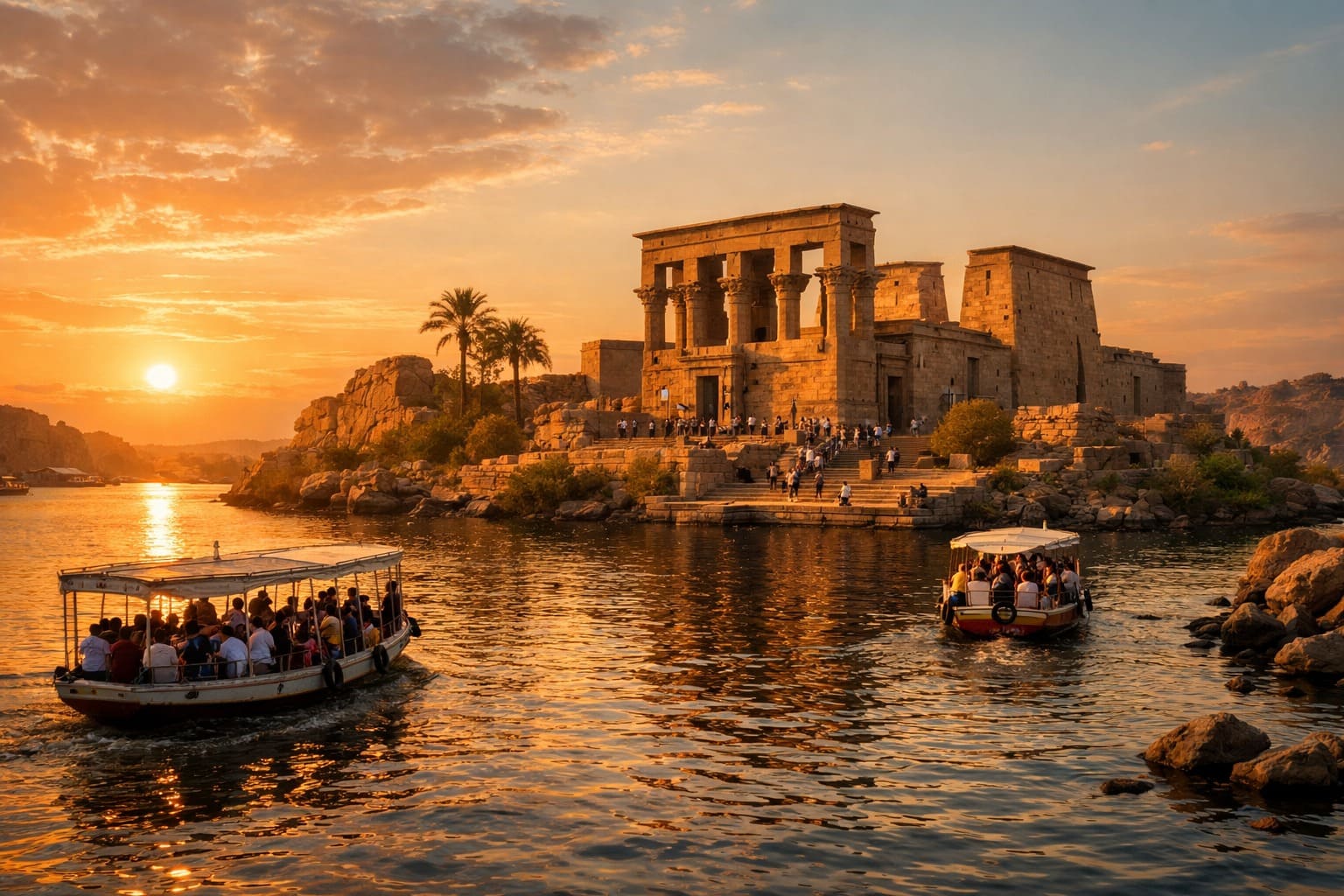
Introduction: A Sacred Island of Myth and Beauty
Among the most enchanting things to do in Egypt, visiting the Temple of Isis at Philae offers a perfect blend of mythology, history, and breathtaking scenery. Located near Aswan, this remarkable temple complex sits gracefully on an island in the Nile, creating one of the most magical and photogenic settings in the country.
For travelers exploring Egypt tours, Philae represents far more than an archaeological site—it is a spiritual destination deeply connected to one of ancient Egypt’s most beloved and powerful goddesses, Isis. Her story, rooted in love, magic, and resurrection, shaped religious beliefs for thousands of years and continues to fascinate visitors today.
Whether you are planning immersive Cairo tours, combining historical landmarks with pyramid tours, or exploring Upper Egypt through a Nile cruise, Philae Temple stands as one of the most unforgettable highlights.
The Mythology of Isis: Goddess of Magic and Life
At the heart of Philae Temple lies the legend of Isis, one of the most important deities in ancient Egyptian mythology. She was worshipped as the goddess of
- Magic
- Motherhood
- Healing
- Protection
Her influence extended beyond Egypt, reaching the Greco-Roman world, where she became a universal symbol of divine motherhood and power.
The Story of Osiris and Resurrection
One of the most famous myths involving Isis is the story of her husband, Osiris. According to legend:
- Osiris was killed and dismembered by his brother Seth
- Isis searched across Egypt to find his body parts
- Using her magical powers, she resurrected him
This story symbolized life, death, and rebirth—core beliefs that shaped ancient Egyptian religion and burial practices.
Philae Temple became the spiritual center of this myth, believed to be one of the sacred places where Isis performed her rituals. As a result, it attracted pilgrims from across Egypt and beyond, making it one of the most important religious destinations in the ancient world.
Historical Background of Philae Temple
The Philae Temple complex was primarily built during the Ptolemaic period (around 300 BCE), although construction continued under Roman rule.
Ptolemaic Influence
The Ptolemaic rulers, of Greek origin, embraced Egyptian traditions and invested heavily in temple construction. Philae became one of their most important religious projects, dedicated to preserving the worship of Isis.
Roman Contributions
Later Roman emperors added to the temple complex, maintaining its religious importance even as Egypt became part of the Roman Empire.
A Last Stronghold of Ancient Religion
Philae holds a unique place in history as one of the last centers of ancient Egyptian religion. While much of Egypt had already transitioned to Christianity, traditional worship continued here until the 6th century AD.
Architectural Highlights: A Blend of Beauty and Symbolism
The architecture of the Philae Temple is a stunning combination of traditional Egyptian design and Greco-Roman influences.
Grand Entrance Pylons
Visitors enter through massive pylons adorned with detailed carvings of pharaohs making offerings to the gods. These towering gateways set the tone for the temple’s grandeur.
Courtyards and Colonnades
Beyond the entrance, open courtyards lead to elegant colonnades:
- Rows of decorated columns
- Intricate capitals inspired by plants
- Symmetrical layouts reflecting harmony
These spaces were used for ceremonies and gatherings.
Sanctuary of Isis
At the heart of the temple lies the sanctuary dedicated to Isis. This sacred chamber once housed her statue and was accessible only to priests.
Relief Carvings and Hieroglyphs
The walls of the temple are covered with detailed reliefs depicting:
- Religious rituals
- Mythological scenes
- Offerings to the gods
These carvings serve as both artistic masterpieces and historical records.
Shrines and Smaller Temples
The complex also includes smaller shrines dedicated to other deities, including Osiris, reinforcing the temple’s role in the broader religious landscape.
Religious Importance: A Sacred Center of Worship
Philae Temple was not just a place of worship—it was a living religious center that played a crucial role in ancient Egyptian spirituality.
Pilgrimage Destination
Devotees traveled from across Egypt and neighboring regions to honor Isis. The temple hosted festivals, rituals, and ceremonies that reinforced its spiritual significance.
Ritual Practices
Priests performed daily rituals, including:
- Offering food and incense
- Reciting sacred texts
- Conducting ceremonies for the gods
These practices were believed to maintain cosmic order and ensure the favor of the gods.
Transition to Christianity
In the later centuries, Philae became one of the last strongholds of pagan worship. Eventually, it was converted into a Christian site, marking a major transition in Egypt’s religious history.
Visitor Experience: A Journey Through Time
Visiting the Philae Temple today is a unique and immersive experience that combines history, nature, and culture.
Arrival by Boat
One of the most memorable aspects of visiting Philae is the journey itself:
- Boats transport visitors across the Nile
- Scenic views of the river and surrounding landscape
- A gradual reveal of the temple as you approach the island
This approach creates a sense of anticipation and wonder.
Exploring the Island
Once on the island, visitors can:
- Walk through ancient courtyards
- Admire detailed carvings up close
- Enjoy panoramic views of the Nile
The peaceful atmosphere makes it a perfect place to reflect and take in the beauty of the site.
Photography Opportunities
Philae is one of the most photogenic locations in Egypt:
- Golden sunsets reflecting on the water
- Dramatic lighting on stone walls
- Unique island setting
It is a favorite among photographers and travelers alike.
Why Philae Temple Is a Must-Visit
1. Unique Location
Unlike most temples, Philae is located on an island, offering a rare and magical setting.
2. Rich Mythology
The connection to Isis and Osiris adds depth and meaning to every part of the site.
3. Architectural Beauty
The combination of Egyptian and Greco-Roman styles creates a visually stunning experience.
4. Cultural Significance
As one of the last centers of ancient Egyptian religion, Philae represents an important chapter in history.
Travel Tips for Visiting Philae Temple
- Visit early in the morning or late in the afternoon for the best light and fewer crowds
- Bring water, sunscreen, and comfortable shoes
- Consider hiring a guide to fully understand the history and symbolism
- Combine your visit with other Aswan attractions
Many Egypt tours include Philae as part of a broader itinerary that may also feature:
- The Aswan High Dam
- Nile River experiences
- Nile cruises to Luxor
Conclusion: A Timeless Symbol of Beauty and Belief
The Temple of Isis at Philae Temple is more than just a historical site—it is a symbol of ancient Egypt’s spiritual depth, artistic brilliance, and enduring legacy.
From the powerful mythology of Isis to the breathtaking beauty of its island setting, Philae offers an unforgettable experience for travelers exploring the best things to do in Egypt.
Whether you are planning immersive Egypt tours, extending your journey with Cairo tours, or combining your adventure with pyramid tours, this extraordinary temple is a must-visit destination that brings history, mythology, and nature together in perfect harmony.