


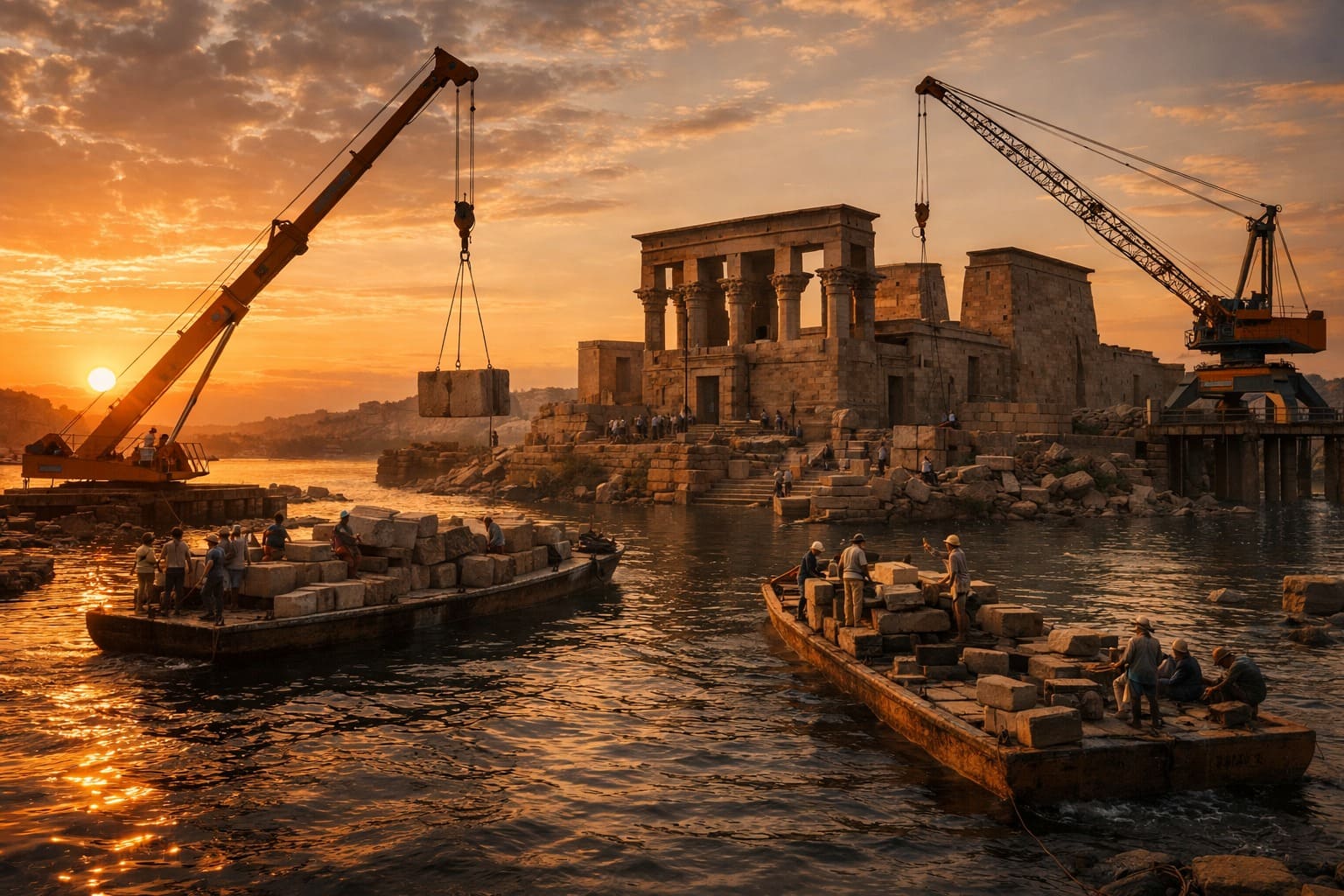
Introduction: A Monument at Risk
The story of the Philae Temple is not just about ancient history—it is also one of modern engineering, international cooperation, and a race against time. Today, the temple stands proudly on an island in the Nile, welcoming visitors from around the world as one of the most unforgettable things to do in Egypt. But just decades ago, it faced the very real threat of disappearing forever beneath rising waters.
For travelers planning Egypt tours, understanding how Philae's preservation adds a powerful layer of appreciation to the visit. This is not only a story of ancient civilization but also one of humanity’s commitment to preserving cultural heritage.
The Problem: Rising Nile Waters
The danger to Philae Temple began in the mid-20th century with one of Egypt’s most ambitious modern projects: the construction of the Aswan High Dam.
Why the Dam Was Built
The dam was designed to
- Control annual Nile flooding
- Provide water for agriculture
- Generate hydroelectric power
While it brought enormous benefits to Egypt’s economy and development, it also had unintended consequences for the country’s ancient monuments.
The Creation of Lake Nasser
The dam led to the formation of Lake Nasser, one of the largest artificial lakes in the world. As water levels rose, entire landscapes—including temples and archaeological sites—were submerged.
Philae Temple, originally located on Philae Island, was among the most threatened.
A Temple in Danger
Before the rescue operation began, earlier dam constructions had already partially flooded Philae Temple for several months each year. With the completion of the High Dam, permanent submersion became inevitable.
The temple’s intricate carvings and structures were at risk of:
- Water erosion
- Structural collapse
- Permanent loss
Without intervention, one of Egypt’s most beautiful and historically significant sites would have vanished.
UNESCO’s Rescue Mission: A Global Effort
Recognizing the urgency of the situation, UNESCO launched an international campaign in the 1960s to save endangered monuments across Nubia.
An International Call to Action
UNESCO appealed to countries around the world for support. The response was extraordinary:
- Financial contributions from multiple nations
- Expertise from engineers and archaeologists
- Collaboration on an unprecedented scale
The rescue of Philae Temple became part of a larger effort that also included saving other monuments, such as Abu Simbel.
A Landmark Preservation Project
This campaign marked one of the first times the global community united to protect cultural heritage. It set a precedent for future preservation efforts worldwide.
For those exploring things to do in Egypt, this story highlights the global importance of the country’s ancient treasures.
The Relocation Process: Moving a Temple Stone by Stone
Saving Philae Temple was not a simple task. Engineers and archaeologists had to carefully dismantle and relocate the entire complex without damaging its structure or artistic details.
Step 1: Building a Protective Barrier
Before dismantling began, a temporary dam was constructed around the temple to isolate it from the surrounding water. This allowed workers to access the site safely.
Step 2: Dismantling the Temple
The temple was taken apart piece by piece:
- Over 40,000 stone blocks were removed
- Each block was carefully cut, documented, and numbered
- Detailed records ensured accurate reconstruction
This meticulous process required extreme precision to preserve the temple’s original design.
Step 3: Transporting the Blocks
Once dismantled, the stones were transported to a new location—Agilkia Island, situated nearby but at a higher elevation.
Step 4: Reassembly
The temple was reconstructed on Agilkia Island:
- Blocks were reassembled in their original positions
- The layout was carefully replicated
- The surrounding landscape was modified to resemble the original site
The result was a near-perfect recreation of the temple, preserving its historical and visual integrity.
Engineering Challenges: A Complex Operation
The relocation of Philae Temple presented numerous technical challenges.
Preserving the Original Design
Ensuring that the temple looked exactly as it did before was a top priority. Even small errors could have altered its historical authenticity.
Protecting Fragile Carvings
The temple’s walls are covered in delicate relief carvings and hieroglyphs. These had to be protected from damage during dismantling and transport.
Preventing Water Damage
Engineers had to ensure that the new site would remain safe from future flooding, requiring careful planning and elevation adjustments.
Maintaining Structural Stability
Reassembling a massive stone structure required advanced engineering techniques to ensure long-term stability.
Why This Project Matters: A Global Symbol of Preservation
The rescue of Philae Temple is more than just a technical achievement—it is a symbol of what humanity can accomplish when working together.
A Model for Future Projects
This operation became a blueprint for preserving endangered heritage sites around the world.
Cultural Importance
Philae Temple represents thousands of years of history, mythology, and religious belief. Saving it ensured that future generations could experience this legacy firsthand.
Tourism and Education
Today, the temple is a major attraction for the following groups:
- Egypt tours
- Cairo tours extended to Upper Egypt
- Nile cruise itineraries
It continues to educate and inspire millions of visitors each year.
Visitor Experience Today: A Living Legacy
Modern visitors to the Philae Temple may not immediately realize that the entire complex has been relocated—but learning this story adds depth to the experience.
What Visitors Can See
- Perfectly reconstructed temples
- Detailed carvings preserved through careful restoration
- Scenic island setting surrounded by the Nile
Arrival by Boat
Just like in ancient times, visitors reach the temple by boat, enhancing the sense of adventure and discovery.
A Must-Visit Destination
Philae is now one of the most iconic stops in Upper Egypt and is often included in the following itineraries:
- Egypt tours
- Nile cruises
- Cultural travel itineraries
Connecting Past and Present
The story of Philae Temple bridges ancient and modern worlds.
- Ancient Egyptians built a monument to honor their gods
- Modern engineers saved it from destruction
This connection makes Philae one of the most meaningful sites among the top things to do in Egypt.
Conclusion: A Triumph of Humanity and Heritage
The rescue of the Philae Temple stands as one of the greatest achievements in the history of cultural preservation. UNESCO and the global community worked together to save a priceless piece of human history from being lost forever.
For travelers exploring Egypt tours, planning immersive Cairo tours, or combining cultural journeys with pyramids tours, Philae offers more than just beauty—it tells a story of resilience, innovation, and global cooperation.
Visiting this remarkable site is not just about seeing ancient ruins; it is about witnessing how the past can be preserved for the future.