


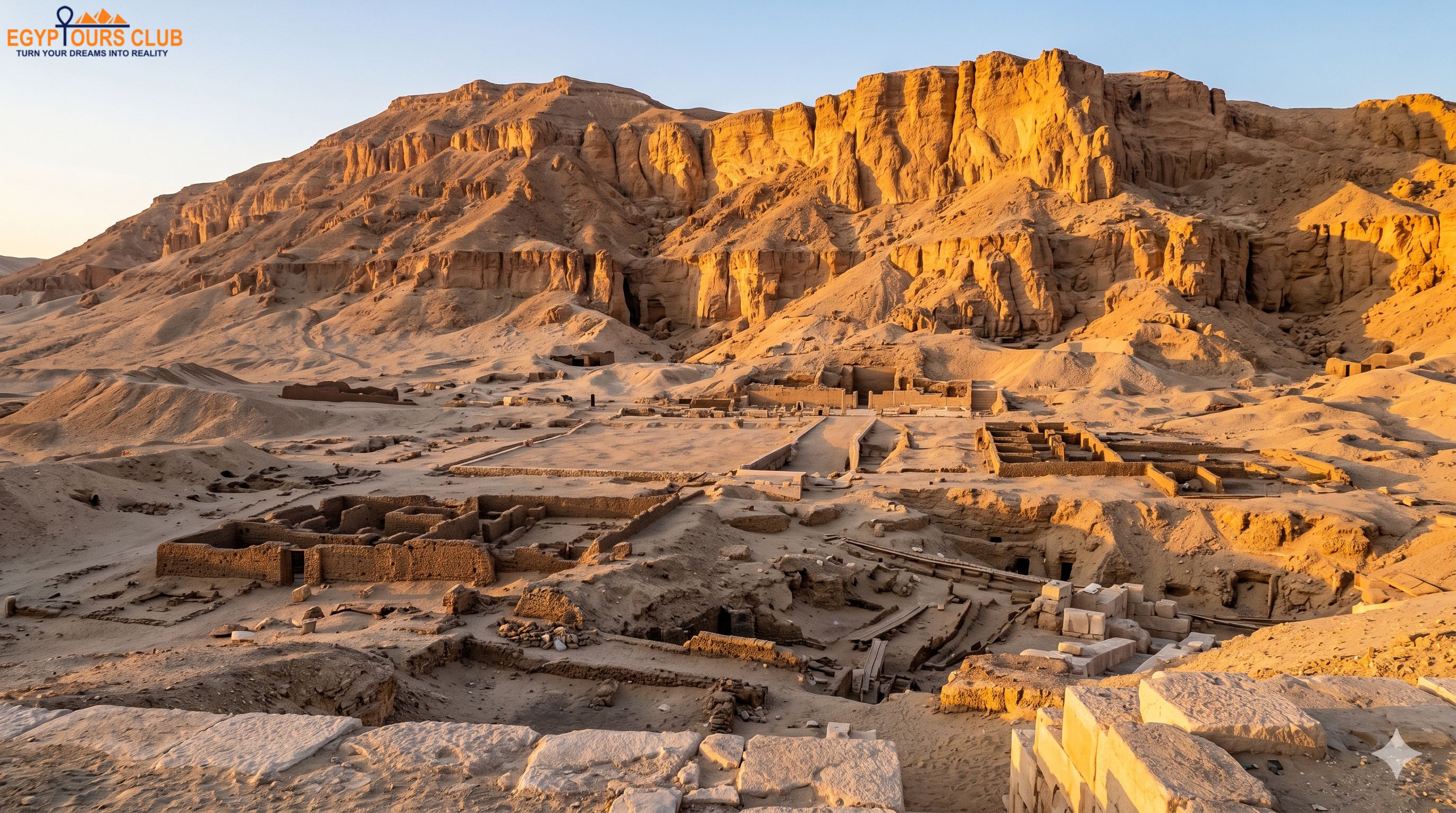
Senusret III Tomb at Abydos: Complete Guide to the Royal Necropolis, Anubis Mountain, and How to Visit
🏛️ Quick Answer
The Senusret III tomb at Abydos is one of the most important royal funerary sites of the Egyptian Middle Kingdom. Located in the South Abydos necropolis at the foot of the sacred Mountain-of-Anubis, the monument formed part of the wider Senusret III mortuary complex and is now understood as a real royal burial site rather than only a symbolic tomb. ARCE describes it as a 180-meter subterranean royal tomb and calls it the first known hidden royal tomb in Egyptian history, while the Penn Museum notes that excavations produced strong evidence the tomb was actually used for the king’s burial.
✨ Overview
If you want a site that combines deep royal history, powerful landscape symbolism, and strong travel value, the Senusret tomb area Abydos is one of the best choices in Upper Egypt. Also written in scholarship as Senwosret III tomb Abydos, this royal complex belongs to one of the strongest kings of the Twelfth Dynasty and stands inside one of Egypt’s most sacred archaeological zones. Abydos itself was one of ancient Egypt’s most important sacred cities, and later generations associated the region strongly with Osiris and royal memorial culture.
This is exactly why the topic works so well for both information seekers and travel planners. A reader may begin with what is the Senusret III tomb at Abydos, history of Senusret III tomb Abydos, or why is Senusret III tomb important, but once they understand the site’s uniqueness, they naturally move toward phrases like visit Senusret III tomb Abydos, private Abydos archaeology tour, and Luxor to Abydos tour. That balance is ideal for a tourism page meant to rank and convert.
📚 What Is the Senusret III Tomb at Abydos?
A very important search phrase is what is the Senusret III tomb at Abydos.
The best short answer is this:
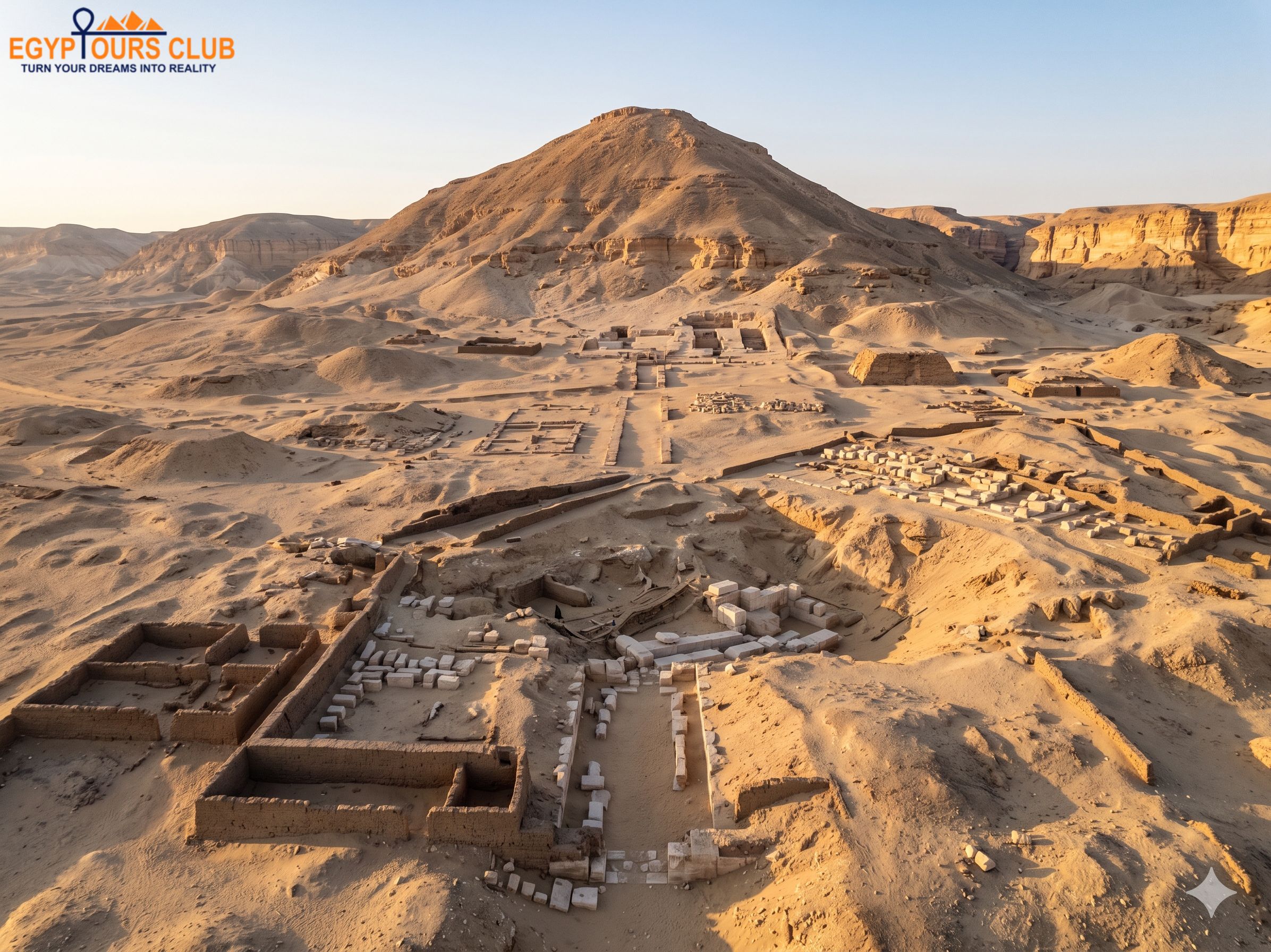
The Senusret III tomb Abydos is a large subterranean royal tomb in the South Abydos necropolis, built as part of the mortuary complex of Pharaoh Senusret III at the foot of the Anubis Mountain desert cliffs.
ARCE identifies the complex as the Mortuary Complex of Pharaoh Senwosret III at South Abydos, and the Penn Museum explains that the tomb was built beneath a naturally pyramidal desert peak called the Mountain-of-Anubis, which acted as the conceptual anchor of the entire complex. This makes the site much more than an isolated burial chamber. It is a deliberately planned royal funerary landscape.
For visitors, this means the Senusret III royal tomb Abydos is not only important because of who was buried there, but because of how the landscape itself was used to express sacred kingship. That gives the site a very strong authority profile for keywords like Abydos royal necropolis Senusret III, subterranean royal tomb Abydos, and Anubis Mountain tomb Senusret III.
🕰️ History of Senusret III Tomb Abydos
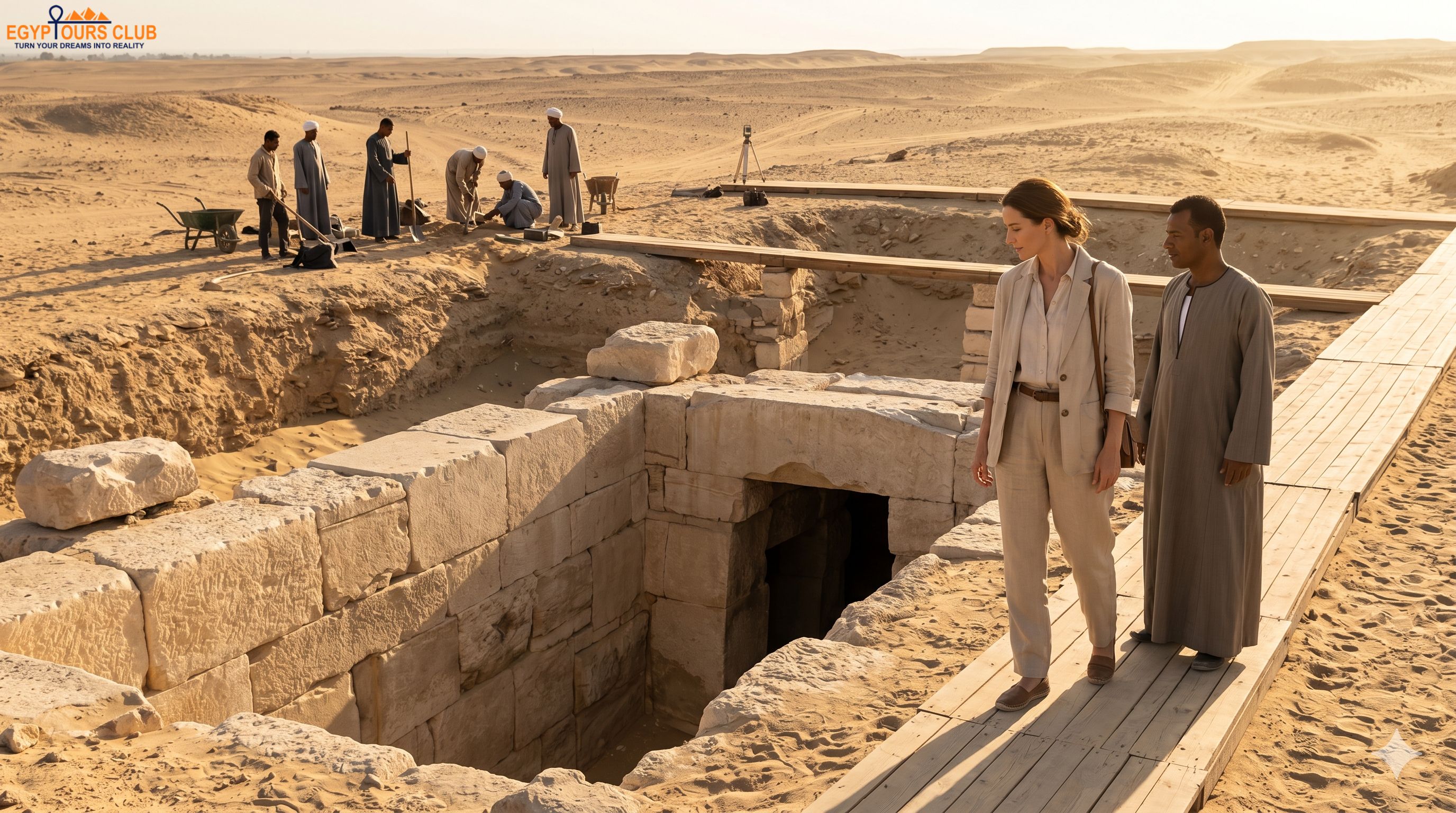
The history of Senusret III tomb Abydos is central to the importance of Middle Kingdom royal architecture. ARCE explains that the subterranean tomb extends roughly 180 meters and has been a major focus of excavation and documentation since 2008. The project describes it as a masterpiece of pharaonic engineering and the first known example of a hidden royal tomb in Egyptian history.
The Penn Museum adds another crucial point: the tomb was first discovered in 1902 and was once thought to be a cenotaph, but excavations between 2008 and 2014 produced considerable archaeological evidence that it was actually used for the burial of the king. That shift is hugely important because it changes the monument from a symbolic funerary statement into a true royal burial site.
📊 Historical Snapshot Table
| Historical element | Why it matters |
|---|---|
| Twelfth Dynasty royal context | Places the tomb in one of Egypt’s strongest Middle Kingdom periods. |
| 180-meter subterranean design | Shows the extraordinary scale of the royal tomb. |
| Hidden royal tomb concept | Makes it one of the most innovative royal funerary monuments in Egyptian history. |
| Excavation evidence for actual burial | Confirms the tomb’s importance as a real royal resting place. |
That is why Senusret III tomb facts, Senusret III tomb explained, and Middle Kingdom tomb Abydos are all very strong informational keyword clusters for the page.
👑 Why Is Senusret III Tomb Important?
A key search phrase is: why is Senusret III tomb important?
The answer is powerful and multi-layered.
✅ Main reasons the site matters
- It belongs to one of the strongest rulers of the Egyptian Middle Kingdom.
- It is one of the largest and most ambitious royal tombs at Abydos.
- It represents one of the earliest known examples of a deliberately hidden royal tomb.
- It stands within the sacred South Abydos necropolis, closely tied to royal funerary ideology and the symbolic landscape of Anubis Mountain.
- It helps explain how royal burial strategies evolved long before the Valley of the Kings. This is an inference based on ARCE’s description of the monument as the first known hidden royal tomb and the Penn Museum’s evidence for its real use as a burial.
For search intent, this section naturally supports both why is Senusret III tomb important and Senusret III mortuary complex while also helping travel users understand why the site deserves a place on an Abydos historical tour.
⛰️ Anubis Mountain and the Royal Necropolis of South Abydos
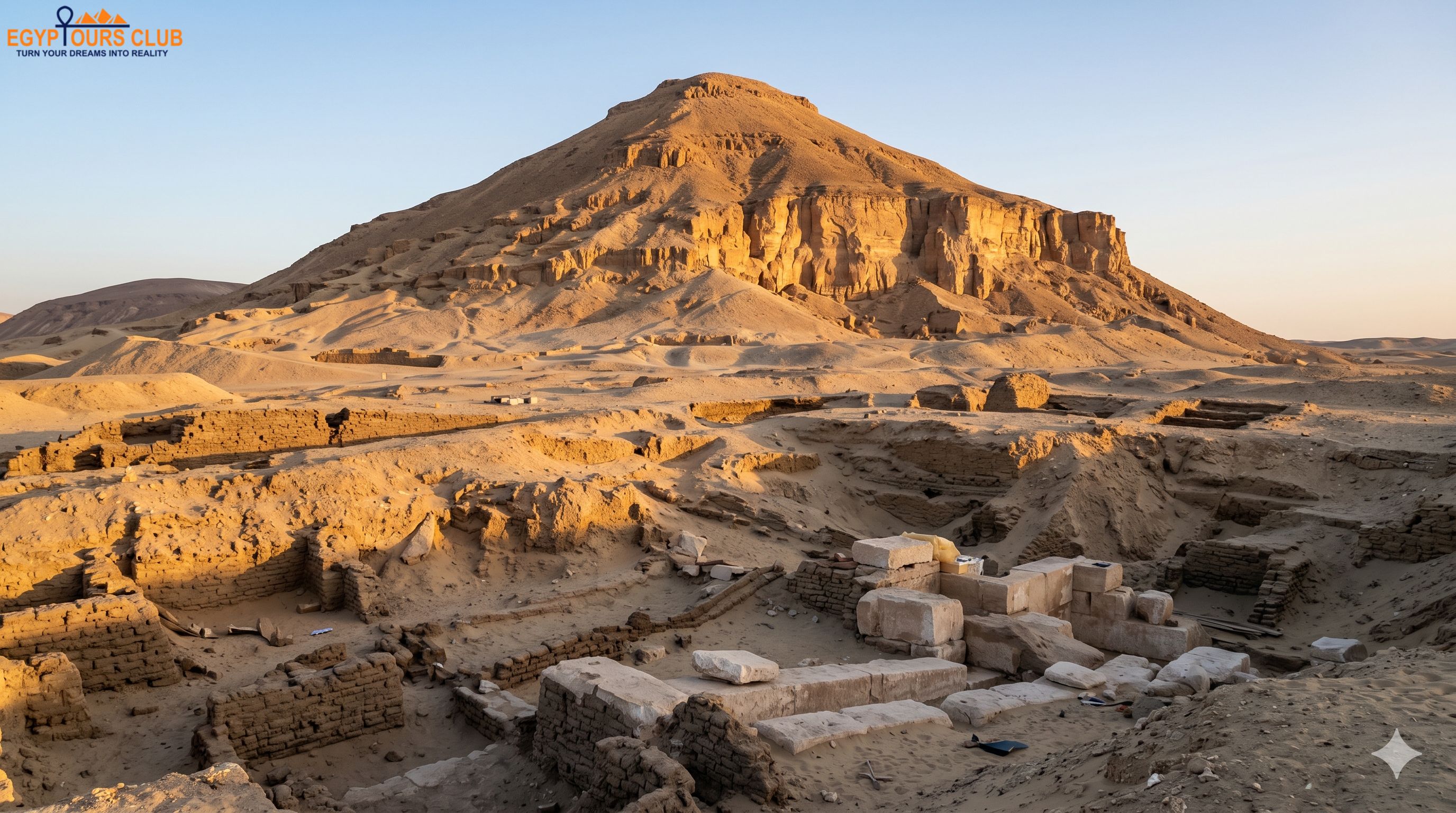
One of the most distinctive features of the Senusret tomb area Abydos is its setting. The Penn Museum explains that the tomb was built at the foot of a prominent, naturally pyramidal desert peak that the ancient Egyptians called the Mountain-of-Anubis. This mountain acted as the symbolic and visual focus of Senusret III’s mortuary complex.
That detail matters because it gives the site an unusually strong sacred geography. The Anubis Mountain tomb Senusret III is not just a burial monument placed in open desert. It is part of a larger designed ritual environment where landscape and architecture work together. This is also why the surrounding Abydos royal necropolis Senusret III area remains so important in archaeology today. Recent work in the same broader Anubis Mountain necropolis has continued to produce royal discoveries, including the 2025 announcement of a previously unknown pharaoh’s tomb in the area.
For a tourism page, this section is extremely valuable because it turns the site from a single ruin into a destination with narrative power. It helps the reader imagine the monument as part of a sacred royal landscape rather than a disconnected archaeological stop.
🧱 Senusret III Mortuary Complex Explained
The Senusret III mortuary complex is one of the strongest authority angles for this page because it broadens the discussion from one tomb into a larger funerary program. ARCE’s project title itself identifies the site as the Mortuary Complex of Pharaoh Senwosret III at South Abydos, while book and museum references describe the complex as including both a royal tomb and a cult temple created for the king’s afterlife worship.
This is where the article becomes especially good for both readers and AI-driven search systems. Instead of only answering “where is the tomb,” it answers:
- how the complex was planned
- why the mountain mattered
- how burial and afterlife worship connected
- why Abydos was chosen as the setting
That depth is what helps a page rank for both direct terms like Senusret III tomb Egypt and more interpretive searches like Senusret III mortuary complex or Senusret III tomb explained.
🚗 How to Visit Senusret III Tomb Abydos
Now we move from information into booking intent.
Searchers using phrases like:
- visit Senusret III tomb Abydos
- how to visit Senusret III tomb
- Senusret III tomb tour
- Senusret tomb area tour
- Abydos tour Senusret III tomb
are not just curious. They are planning.
The best approach is to position the site as part of a broader Abydos archaeology tour rather than as a completely standalone visit. Egypt’s official monuments platform lists Abydos Temple as a main visitor access point in Sohag, with published opening hours generally from 7:00 am and last entry at 4:00 pm.
✅ Best travel options
- Senusret III tomb tour for archaeology-focused travelers
- South Abydos tour for visitors who want a deeper necropolis experience
- private Abydos tour Egypt for guests who want comfort and interpretation
- Luxor to Abydos tour for travelers based in Luxor
- private Egypt archaeology tour for high-end cultural travelers
- Abydos necropolis tour for those interested in royal burial landscapes
📊 Best Visitor Intent Table
| Tour type | Best for |
|---|---|
| Senusret III tomb tour | Travelers specifically focused on Middle Kingdom archaeology |
| Luxor to Abydos tour | Visitors staying in Luxor who want a historical day trip |
| Private Abydos archaeology tour | High-value guests wanting depth and expert explanation |
| South Abydos tour | Travelers interested in necropolis landscapes beyond the main temple |
| Book Abydos tour Egypt | Users closest to direct booking intent |
This section is where informational curiosity turns naturally into conversion. Once a visitor understands the site’s importance, a private Abydos archaeology tour becomes much easier to justify.
🧳 Why Include the Senusret Tomb Area in an Abydos Tour?
This is the conversion bridge.
Most visitors know Abydos mainly for the Temple of Seti I, but the Senusret tomb area Abydos adds a different dimension entirely. It introduces:
- Middle Kingdom royal history
- hidden royal burial innovation
- the sacred landscape of Anubis Mountain
- the deeper necropolis context of Abydos
That makes it ideal for:
- serious history lovers
- archaeology travelers
- premium custom itineraries
- travelers looking for less obvious sites in Egypt
- guests booking a private Abydos archaeology tour or book Abydos tour Egypt experience
For a tourism site, this is exactly the right balance. The page first answers what is the Senusret III tomb at Abydos, then demonstrates why is Senusret III tomb important, and finally turns that knowledge into a reason to visit Senusret III tomb Abydos within a high-quality curated experience.
📌 Senusret III Tomb Facts
Here are some quick Senusret III tomb facts that work well for both readers and AI summaries.
Quick Facts Table
| Fact | Detail |
|---|---|
| Main name | Senusret III tomb / Senwosret III tomb |
| Location | South Abydos, Egypt |
| Setting | At the foot of the Mountain-of-Anubis |
| Type | Subterranean royal tomb |
| Complex | Part of the Senusret III mortuary complex |
| Key importance | First known hidden royal tomb in Egyptian history according to ARCE |
| Travel fit | Best as part of an Abydos archaeology tour |
❓ FAQs About the Senusret III Tomb Area
What is the Senusret III tomb at Abydos?
It is a major subterranean royal tomb in South Abydos, built as part of the mortuary complex of Pharaoh Senusret III at the foot of the Mountain-of-Anubis.
Is Senusret III the same as Senwosret III?
Yes. Both spellings refer to the same Middle Kingdom king. ARCE uses Senwosret III, while many general travel and history pages also use Senusret III.
Why is the Senusret III tomb important?
Because it is one of Egypt’s most significant Middle Kingdom royal tombs, a hidden subterranean monument, and part of the sacred royal necropolis at South Abydos.
Can I visit the Senusret III tomb area on an Abydos tour?
Yes, the best approach is to include it within a broader Abydos archaeology or historical tour, especially if you want interpretation and context. Official visitor logistics for the area are generally tied to Abydos Temple access information.
What makes the Anubis Mountain setting special?
The mountain formed the symbolic anchor of the complex and gave the tomb a uniquely sacred desert landscape.
🏁 Final Thoughts
The Senusret III tomb Abydos is one of the strongest hidden-history pages you can build for a tourism site targeting serious cultural travelers. It has exactly the right mix for modern ranking: a clear entity, strong historical authority, unique landscape symbolism, and natural pathways into booking intent. ARCE, the Penn Museum, and current Abydos visitor information all support the page’s core narrative: this is a real royal burial complex of major importance in one of Egypt’s holiest archaeological landscapes.