


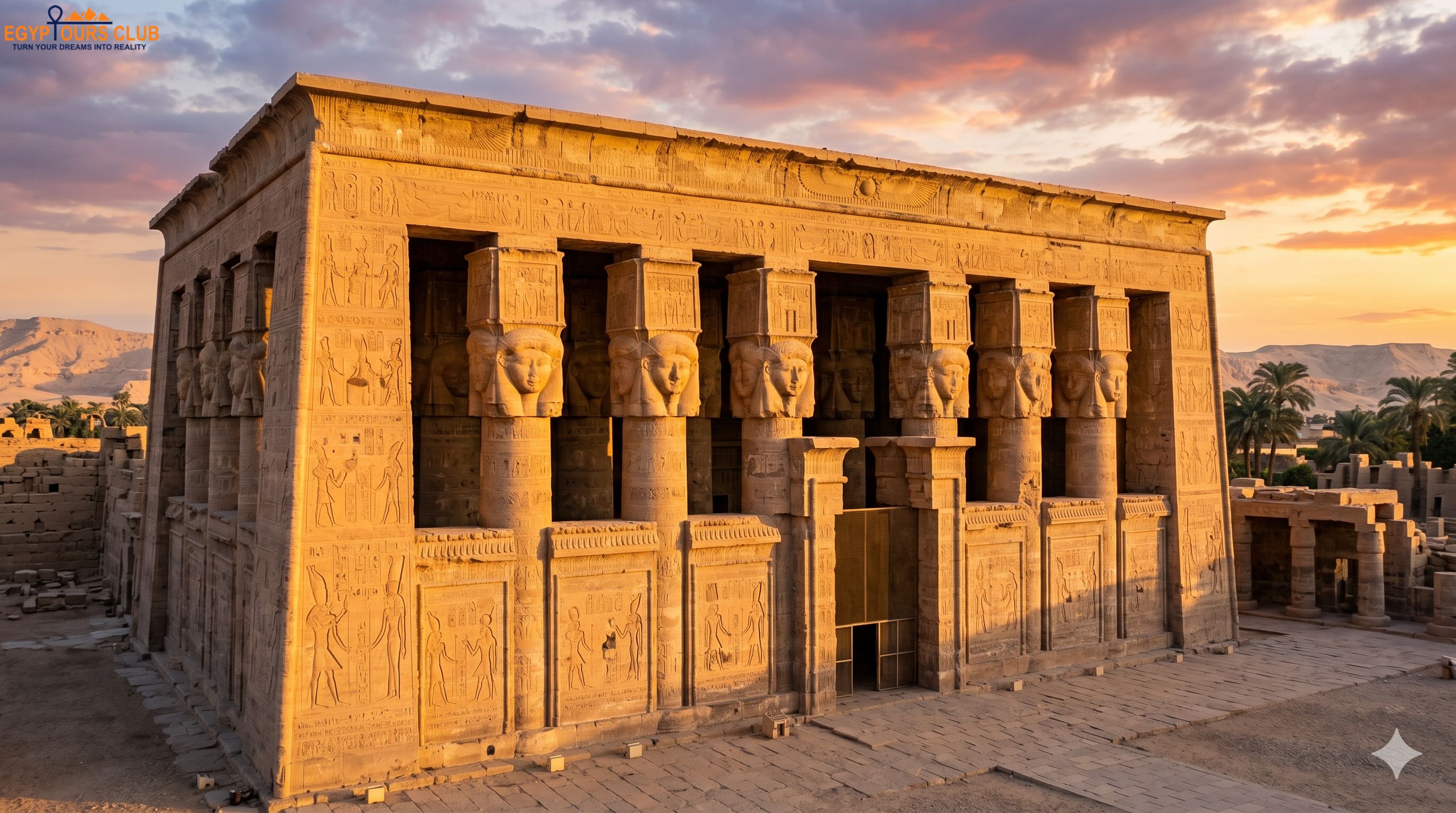
Temple of Hathor
The main temple is dedicated to Hathor and remains one of the strongest visual expressions of her cult in Egypt.
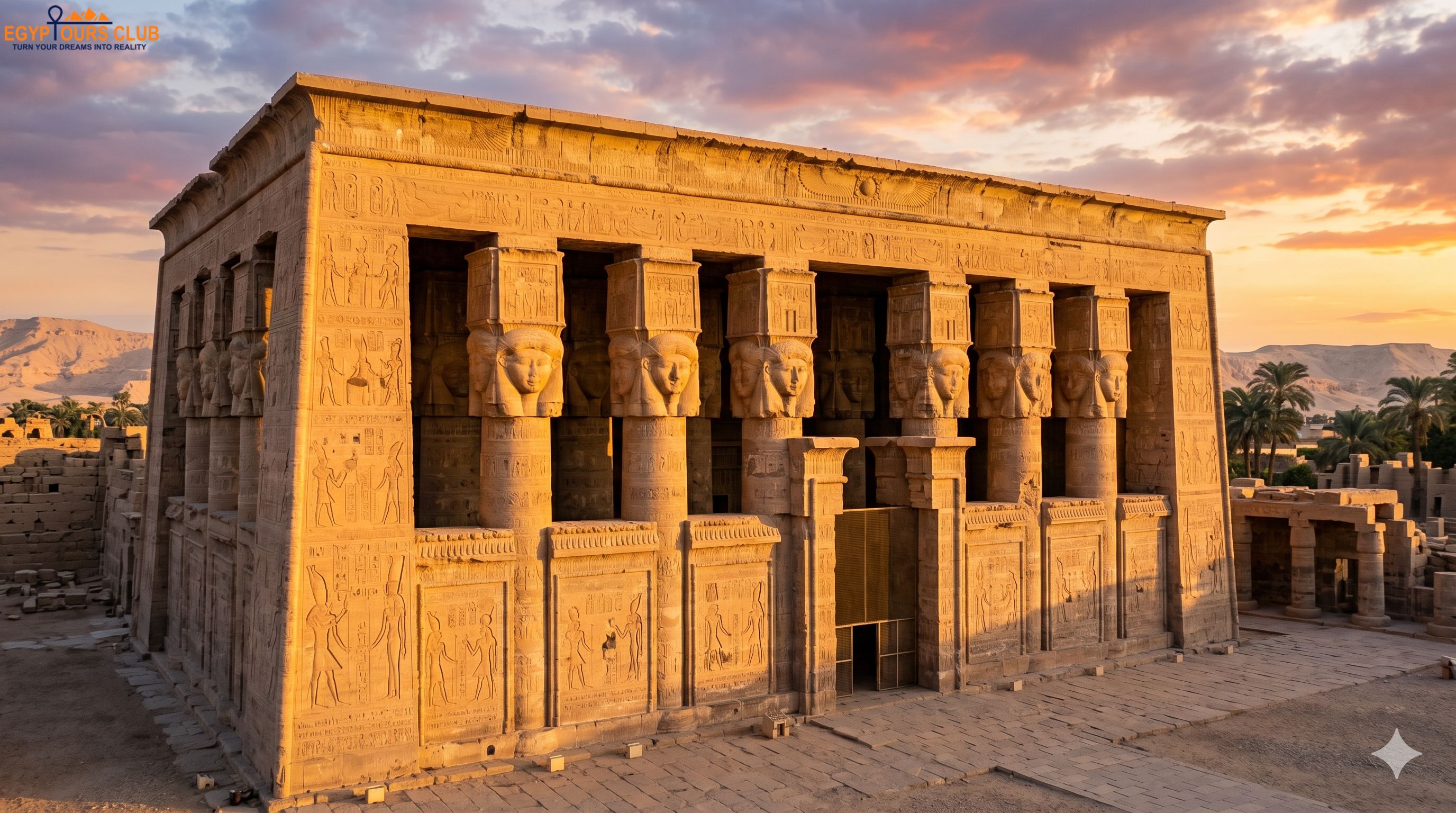
One of Egypt’s most complete temple experiences, where Hathor columns, astronomical ceilings, crypts and sacred spaces still feel alive.
Dendera Temple Complex Egypt is one of the finest temple sites in Upper Egypt, centered on the magnificent Temple of Hathor Dendera. Famous for Hathoric columns, carved reliefs, ceiling decoration, zodiac imagery, crypts, chapels and a powerful sense of preservation, it is one of the most rewarding cultural day trips from Luxor.
Dendera Temple Complex is a major ancient Egyptian sacred site near Qena in Upper Egypt, centered on the Temple of Hathor. It is famous for its preserved temple halls, Hathor-headed columns, detailed reliefs, Dendera zodiac tradition, astronomical ceiling decoration, crypts, roof chapels and strong day-trip access from Luxor.
Dendera is the kind of site that surprises even travelers who have already visited Luxor, Karnak and the Valley of the Kings. It feels preserved, atmospheric and richly decorated, with a strong balance between monumental architecture and intimate sacred detail.
The heart of the complex is the Temple of Hathor Dendera, dedicated to one of ancient Egypt’s most beloved goddesses, associated with joy, music, motherhood, beauty, the sky and divine protection. The temple’s façade, columns and ceiling decoration create one of the most memorable interiors in Upper Egypt.
For travelers searching for Dendera Temple Complex, Dendera Temple Egypt, Hathor Temple Dendera, Dendera Temple ceiling, Dendera zodiac ceiling or a Luxor to Dendera tour, this site offers exactly the depth, beauty and cultural value those searches suggest.
Temple of Hathor · Dendera Complex
The visual power of Dendera comes from its complete temple body: exterior façade, carved walls, decorated ceilings, Hathor-headed columns and roof-level views across the sacred enclosure.
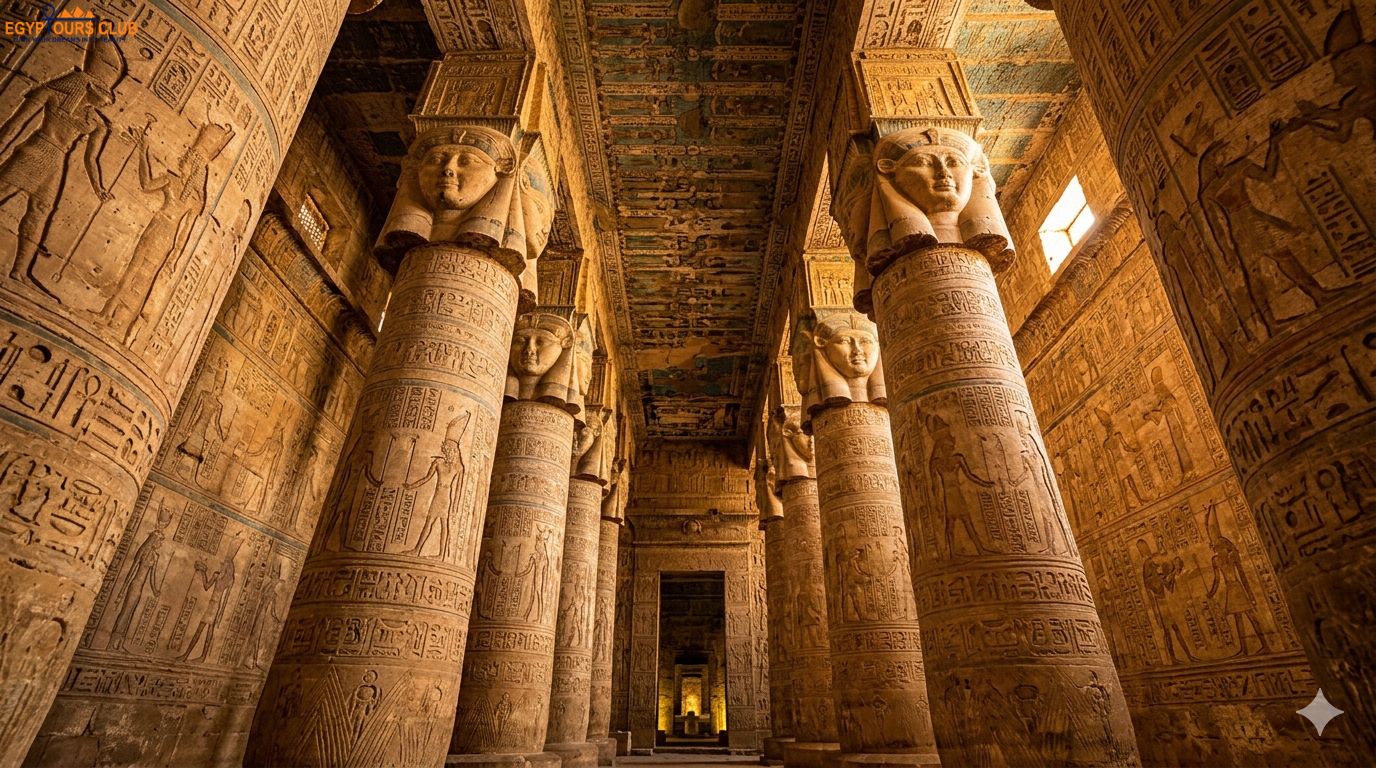
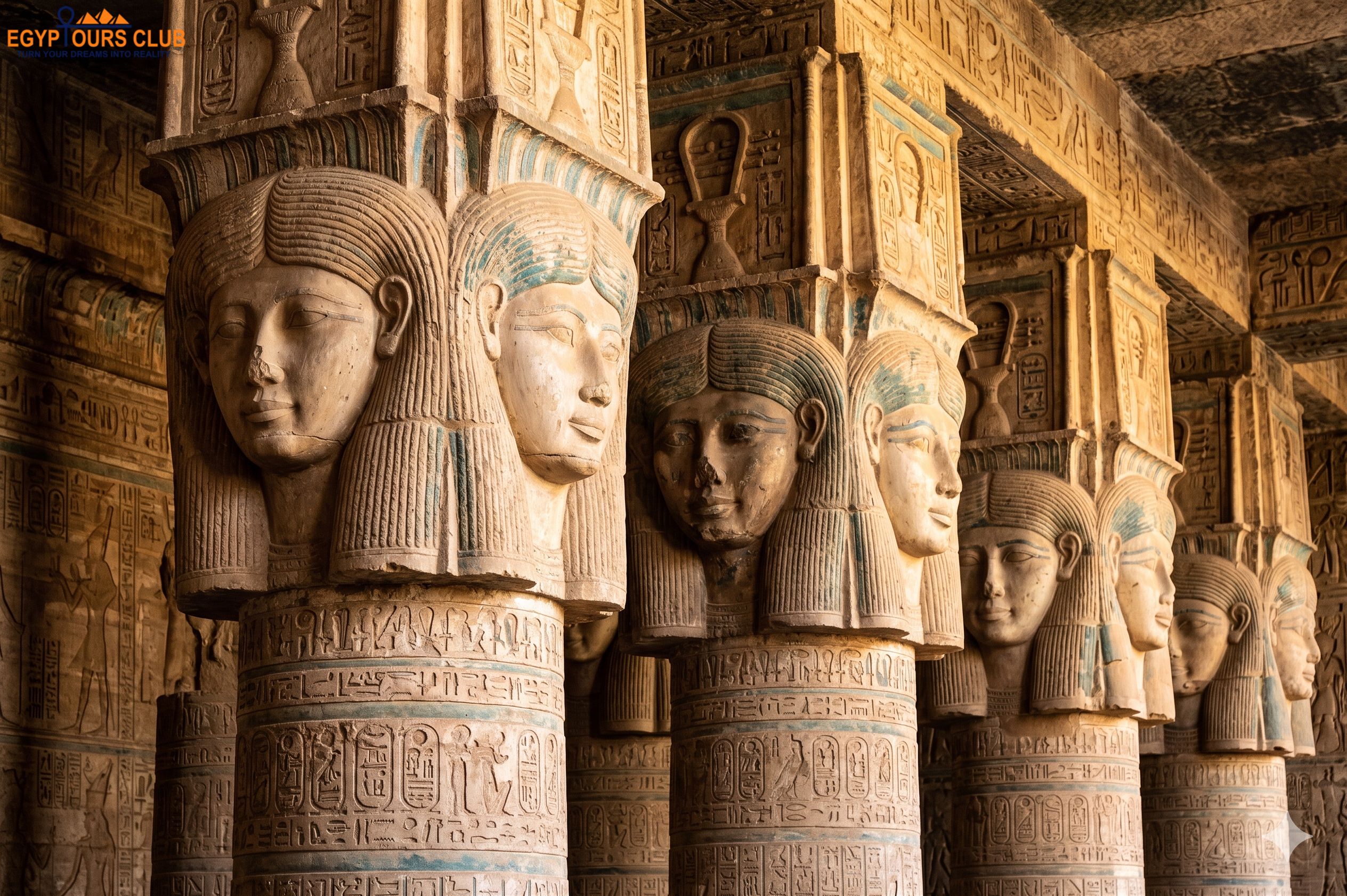
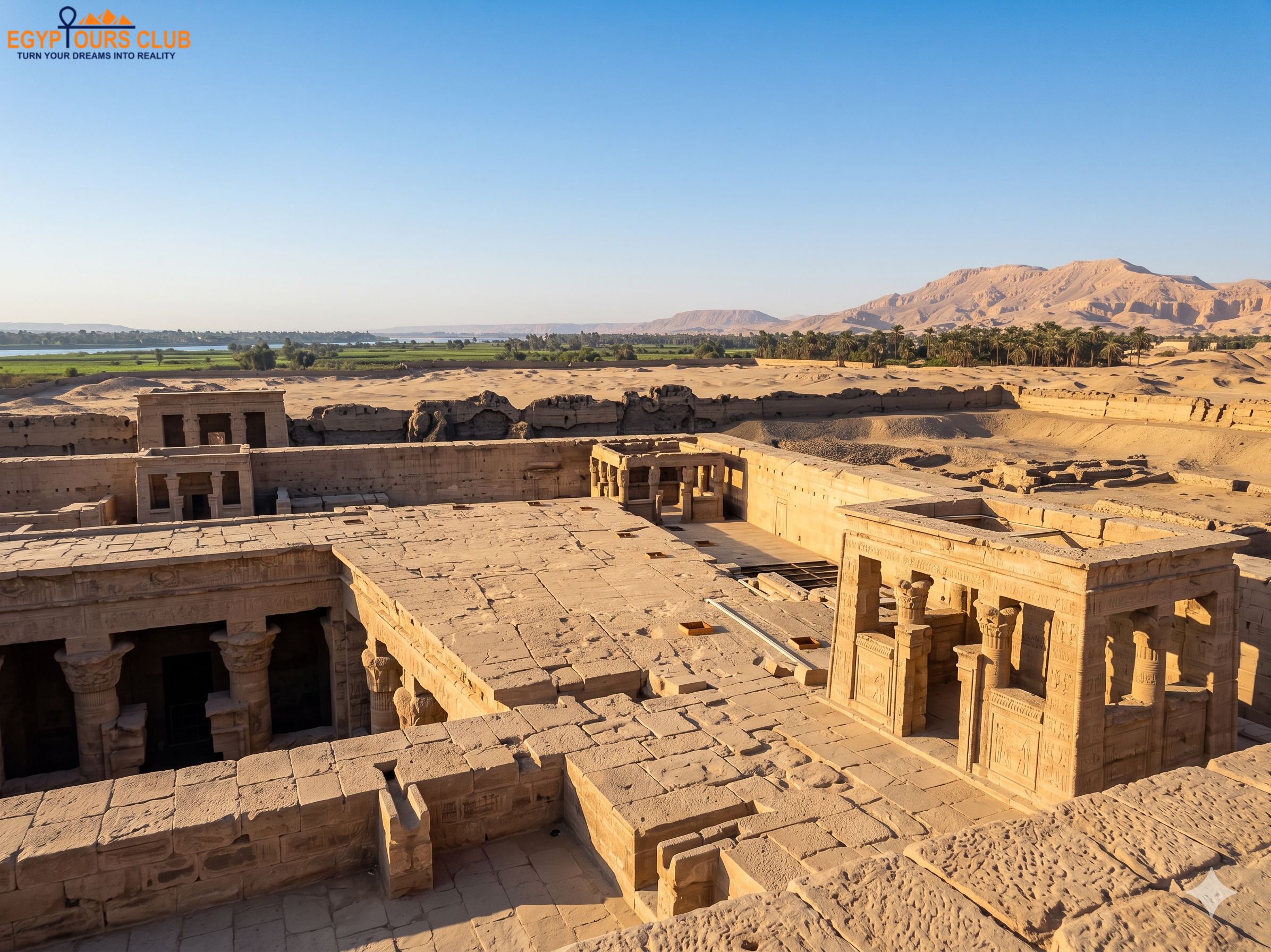
Dendera matters because it combines preservation, mythology, art, astronomy and sacred architecture in one highly readable temple complex.
The main temple is dedicated to Hathor and remains one of the strongest visual expressions of her cult in Egypt.
The columns with Hathor faces are among the most recognizable architectural features in any Egyptian temple.
The ceiling decoration links the temple with sky symbolism, divine order and the famous celestial identity of Dendera.
The roof areas and chapels add depth to the visit and help explain the temple as a multi-level sacred environment.
Carved walls preserve ritual scenes, divine imagery, offerings and religious symbolism in impressive detail.
Dendera includes more than one hall: crypts, chapels, roof spaces, a sacred enclosure and related ritual structures.
Dendera is globally associated with celestial symbolism. The temple’s astronomical decoration, zodiac tradition and painted ceiling details make it one of Egypt’s most intellectually engaging temple visits.
Dendera is commonly visited from Luxor, either as a focused day trip or as part of a full-day route with Abydos Temple.
| Visit Option | Best For | Suggested Flow |
|---|---|---|
| Dendera Temple day tour | Travelers with limited time | Luxor → Dendera Temple Complex → return to Luxor |
| Luxor to Dendera private route | Visitors who want flexible timing and deeper guiding | Hotel pickup → Temple of Hathor → roof and chapels → relaxed return |
| Dendera and Abydos tour | History lovers and serious temple travelers | Luxor → Dendera → Abydos Temple of Seti I → Luxor |
| Upper Egypt temple route | Travelers building a longer journey | Luxor → Dendera → Abydos → Sohag or Aswan extensions |
Dendera is powerful as a single-site visit, but its strongest route is often with Abydos, where Hathor and Osiris create one of the richest cultural pairings in Upper Egypt.
A focused visit to the Temple of Hathor, ideal for travelers who want a powerful temple excursion without overloading the day.
Request this route →Pair Hathor’s temple at Dendera with Abydos Temple of Seti I for a deeper sacred journey through Upper Egypt.
Explore the tour →Build a custom journey linking Luxor, Dendera, Abydos, Sohag, Esna, Edfu, Kom Ombo and Aswan.
Create custom itinerary →Final routing depends on hotel location, available time, road conditions, guide availability and whether you want Dendera alone or Dendera with Abydos.
Use these pages to connect Dendera with Luxor, Abydos and the wider Upper Egypt temple route.
| Route | Best For | Suggested Flow | Useful Link |
|---|---|---|---|
| Focused Dendera Day | Travelers staying in Luxor with limited time | Luxor → Dendera Temple Complex → return to Luxor | Private Dendera day trip |
| Dendera and Abydos Full Day | History lovers and temple travelers | Luxor → Dendera Temple → Abydos Temple → Luxor | Dendera and Abydos tour |
| Upper Egypt Temple Route | Repeat Egypt visitors | Luxor → Dendera → Abydos → Esna → Edfu → Kom Ombo → Aswan | Luxor day tours |
| Private Cultural Journey | Slow travel and specialist interests | Guide-led route around Hathor, Osiris, temple ceilings, crypts and sacred architecture | Tailor made Egypt tours |
Dendera Temple Complex is an ancient sacred site near Qena in Upper Egypt, centered on the Temple of Hathor and known for its preserved halls, columns, ceiling decoration, crypts and chapels.
It is famous for the Temple of Hathor, Hathor-headed columns, richly carved reliefs, astronomical ceiling decoration, zodiac imagery and one of Egypt’s most preserved temple interiors.
Yes. Dendera is commonly visited as a private day trip from Luxor and can also be combined with Abydos Temple in one full-day itinerary.
The Dendera zodiac is the famous celestial design associated with the temple’s astronomical symbolism and sky imagery.
Yes. Dendera is especially worth visiting for travelers interested in temple art, Hathor, ancient astronomy, preserved interiors and meaningful day trips from Luxor.
You can see Hathor columns, decorated ceilings, relief scenes, chambers, crypts, chapels, roof areas and sacred spaces inside the wider complex.
Yes, if you have a full day. Dendera and Abydos together create one of the strongest temple routes from Luxor.
Most visitors should allow enough time to explore the main hall, ceiling, Hathor columns, crypts, roof areas and the wider temple enclosure with a guide.
Visit the Temple of Hathor with a private guide, then connect Dendera’s ceiling, zodiac imagery, crypts and Hathor columns with Abydos, Luxor and the wider sacred route of Upper Egypt.